AI Content Generator vs Human Writer for SEO: Which Delivers Better Results?
 Thu Nghiem
SEO teams face a tough choice: use AI for speed and scale or rely on human writers for depth and brand voice. Discover when to use AI, when to use humans, and how to build a hybrid workflow that boosts SEO performance and team efficiency.
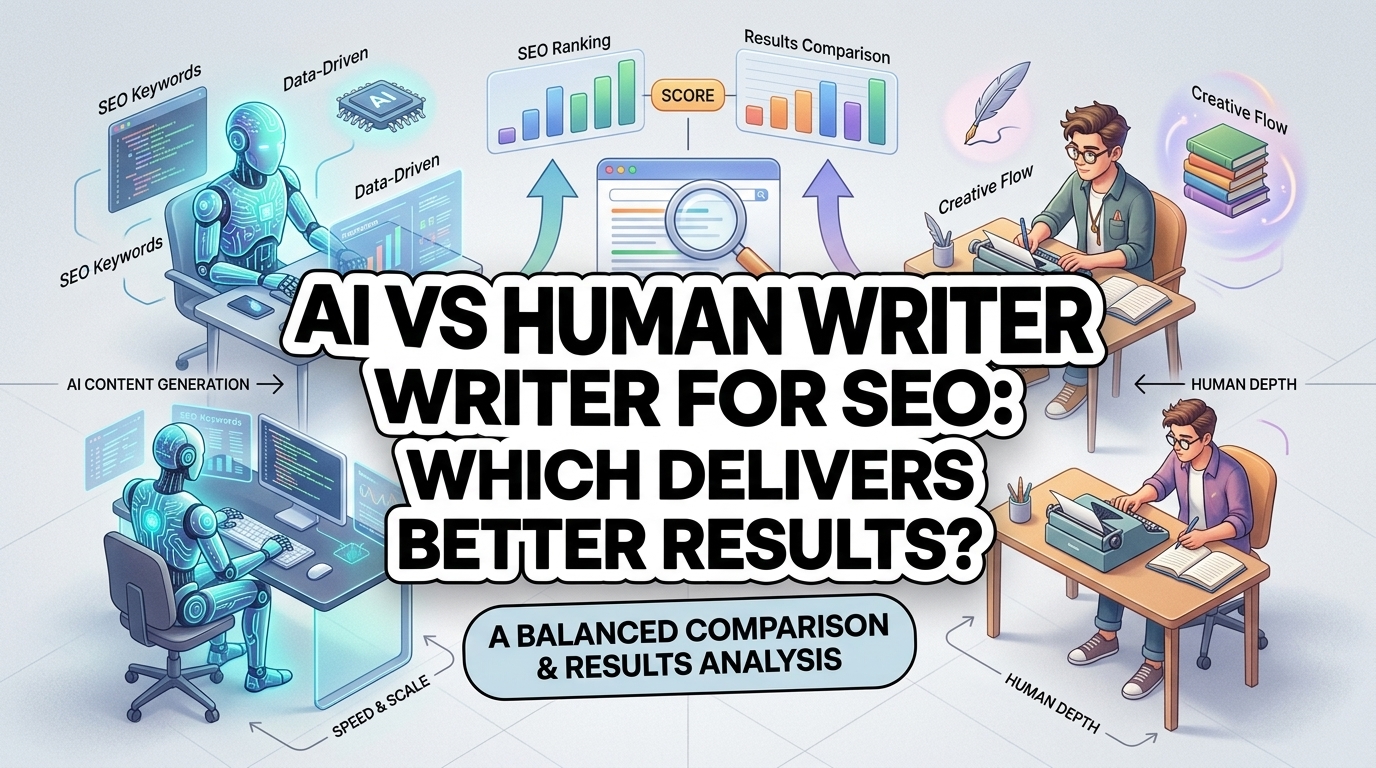
SEO teams are under pressure to scale content without sacrificing quality. AI content generators promise speed and volume, but will they actually rank? Human writers bring depth and brand voice, but at what cost and pace?
The best results often come from combining the two: AI drafts at scale, humans refine for authority. This comparison breaks down when to use AI, when to use humans, and how to build a hybrid workflow that boosts both SEO performance and team efficiency.
Why This Comparison Matters Now
AI adoption in SEO has surged, but so have the risks of low-quality, generic content flooding SERPs. Teams are caught between two problems:
- Too slow: Waiting weeks for human writers to produce enough content to target competitive clusters.
- Too generic: Publishing AI drafts that rank poorly because they lack brand voice, depth, or E-E-A-T signals.
The gap isn’t just about speed or cost—it’s about aligning content strategy with Google’s evolving quality standards. Teams that rely solely on AI often struggle with thin, outdated, or off-brand content. Teams that rely solely on humans struggle to scale to meet content velocity demands.
A practical solution is emerging: human-in-the-loop AI workflows, where AI handles heavy lifting and humans ensure quality, voice, and compliance. This approach delivers both scale and authority—without sacrificing SEO performance.
AI Content Generators: Pros and Cons for SEO
AI content generators excel at speed, volume, and structured outputs. Here’s where they shine—and where they fall short for SEO.
Speed and Volume
AI can turn a keyword brief into a publish-ready draft in minutes. For teams targeting large keyword clusters, this means:
- Brief-to-draft in hours, not days
- Multiple drafts per hour for testing variations
- Bulk generation for seasonal campaigns or product launches
For example, an AI agent can process a cluster of 20 related keywords and generate 20 structured outlines and drafts simultaneously. This is impossible with human writers working in parallel.
Consistency and Keyword Targeting
AI systems trained on high-performing content can consistently target:
- Primary and secondary keywords
- Semantic clusters and related terms
- Structured headings and meta descriptions
However, this consistency can become a liability if the AI relies on overly generic training data. Many AI models produce content that sounds fine but lacks depth or original insight.
E-E-A-T Limitations
Experience, Expertise, Authoritativeness, and Trustworthiness (E-E-A-T) are critical for ranking in competitive niches. AI struggles here because:
- No lived experience: AI can’t reference real user scenarios or case studies.
- No brand voice: It mimics style, but often lacks the nuance of a brand’s unique tone.
- Outdated info: Without access to live data or proprietary sources, AI drafts may include stale facts or links.
For B2B SaaS teams, E-E-A-T is non-negotiable. Content must reflect genuine expertise and authority in the niche.
Technical SEO Benefits
AI can automate parts of technical SEO that humans find tedious:
- Generating structured outlines with intent alignment
- Suggesting schema markup for FAQs, how-tos, or products
- Creating meta titles, descriptions, and alt text at scale
These outputs are valuable when integrated into a review workflow. But they’re not substitutes for human judgment.
Cost and Accessibility
AI tools are accessible to teams of all sizes. There’s no need to hire full-time writers for initial drafts. For teams with tight budgets or tight deadlines, AI is a cost-effective starting point.
But: The real cost comes later if AI drafts require heavy editing, or if they fail to rank due to thin content or lack of authority.
Human Writers: Pros and Cons for SEO
Human writers bring depth, originality, and brand alignment that AI can’t replicate. But they come with trade-offs.
Depth, Originality, and Brand Voice
Human writers can:
- Tell original stories backed by data and experience
- Adapt tone to match brand guidelines precisely
- Add nuance, humor, or personality that resonates with audiences
For B2B SaaS, this means content that stands out in crowded SERPs and builds trust with readers.
Contextual Expertise and E-E-A-T
Humans bring:
- Real-world experience in the niche
- Ability to reference proprietary tools, case studies, or customer stories
- Authority that AI can’t fake
For example, a human writer can interview product managers, pull from internal docs, and reference actual customer outcomes—elements that strengthen E-E-A-T.
Speed and Cost Trade-offs
The biggest drawbacks are speed and cost:
- A single article may take hours or days to draft, edit, and approve
- Cost per word is higher, especially for specialized topics
- Scaling to meet content velocity goals becomes a bottleneck
For teams targeting competitive clusters or seasonal campaigns, this can mean missing opportunities.
Consistency Risks
Human writers can vary in style, tone, and quality. Without clear guidelines and review processes, content may feel inconsistent. This is especially true for teams using multiple freelancers or agencies.
Head-to-Head: SEO Performance Metrics
Let’s compare AI and human content across key SEO performance indicators.
| Metric | AI Generators | Human Writers |
|---|---|---|
| Drafts per hour/day | 10–50+ | 1–5 |
| Quality (SERP rankings) | Moderate (depends on prompt/data) | High (if experienced) |
| Featured snippet potential | Low (unless prompted) | High (with original insights) |
| Backlink potential | Low (generic content) | High (unique, authoritative) |
| Cost per word | $0.01–$0.10 | $0.20–$2.00+ |
| Freshness and updates | Fast (with prompts) | Slow (unless prioritized) |
Speed vs. Quality: The Trade-off
AI wins on speed and volume. Humans win on depth and authority. But the real question isn’t AI vs. human—it’s how to combine them for the best SEO outcomes.
Scalability and Clusters
For keyword clusters, AI can generate initial drafts for all target pages in a single pass. Humans then refine each piece for brand voice, depth, and E-E-T. This hybrid approach allows teams to:
- Cover large clusters quickly
- Maintain quality across every page
- Ensure each page strengthens the cluster’s overall authority
Best of Both Worlds: Human-in-the-Loop AI Workflows
The most effective SEO content strategy isn’t AI vs. human—it’s AI with human oversight. Here’s how it works.
How It Improves SEO Outcomes
- AI drafts are generated from structured briefs and keyword clusters.
- Human editors refine voice, add depth, validate facts, and ensure brand alignment.
- Review gates prevent publishing without approval.
This workflow delivers:
- 12× faster brief-to-draft compared to human-only pipelines
- 48-hour cluster-to-publish averages
- Retained brand voice and E-E-A-T signals
Example Workflow Using BlogCrew
BlogCrew’s agentic SEO pipeline automates the heavy lifting:
- Research agent ingests Search Console data to identify keyword clusters.
- Brief agent creates structured outlines with intent and SEO targets.
- Article writer generates full drafts for each keyword.
- Reviewer agent runs SEO checklists for technical and on-page optimization.
- Image generator creates hero and OG images.
- Human editor approves or revises drafts for brand voice and depth.
- Publisher schedules content to the blog, BlockForm sites, or custom endpoints.
Result: Teams publish high-quality, brand-aligned content at scale—without sacrificing SEO performance.
Benefits of Human-in-the-Loop
- Speed: AI handles repetitive tasks; humans focus on high-value edits.
- Quality: Humans ensure accuracy, voice, and compliance.
- Scalability: Teams can manage large clusters without hiring more writers.
- Consistency: Brand voice and style remain uniform across all content.
When to Use AI vs. Humans (Decision Guide)
Not every piece of content needs the same approach. Use this guide to decide when to rely on AI, humans, or a hybrid.
Use AI When:
- Speed and scale are priorities: Launching a campaign, covering a large cluster, or meeting a tight deadline.
- Topics are data-driven: Product pages, FAQs, or technical documentation where structure matters more than storytelling.
- Budget is tight: Initial drafts can be generated at low cost, with human review reserved for key pages.
Use Humans When:
- Brand voice and tone are critical: Homepage copy, mission statements, or thought leadership pieces.
- E-E-A-T signals are essential: Competitive niches like SaaS, finance, or healthcare where authority drives rankings.
- Content must stand out: Stories, case studies, or original research that competitors can’t replicate.
Use Both When:
- Editorial oversight is required: Compliance-heavy industries or teams with strict brand guidelines.
- Conversion optimization matters: Landing pages, CTAs, and long-form content where persuasive writing impacts revenue.
- Content must be updated regularly: Evergreen topics that require fresh insights or data.
Step-by-Step: Build Your Hybrid SEO Content Workflow
Ready to implement a human-in-the-loop workflow? Follow these steps.
1. Start with Keyword Cluster Strategy
- Identify core topics and subtopics using tools like Search Console, Ahrefs, or SEMrush.
- Group related keywords into clusters where each page strengthens the next.
- Prioritize clusters based on search volume, competition, and business goals.
2. Use AI to Generate Structured Briefs and Drafts
- Input your cluster into an AI brief agent.
- Set intent, target keywords, and brand guidelines.
- Generate outlines and initial drafts for each keyword.
3. Human Review for Quality, Tone, and E-E-A-T
- Assign editors to review drafts for:
- Accuracy and factual correctness
- Alignment with brand voice and tone
- Depth and originality
- E-E-A-T signals (experience, authority, trust)
- Revise or request rewrites as needed.
4. Publish with Built-in CTAs and Conversion Paths
- Use tools like BlockForm to embed conversion forms directly into pages.
- Add clear CTAs that guide readers to next steps (e.g., demo requests, downloads).
- Ensure conversion paths are seamless and aligned with the content’s intent.
5. Monitor and Iterate Based on Performance
- Track rankings, traffic, and conversions for each page.
- Identify underperforming pages and update content with fresh insights or data.
- Use performance data to refine your cluster strategy and AI prompts.
Conclusion
AI content generators deliver speed and scale, but they often lack the depth and authority needed for strong SEO performance. Human writers provide the originality and E-E-A-T signals that drive rankings, but they can’t match AI’s volume or cost efficiency.
The best solution is a human-in-the-loop AI workflow: AI handles the heavy lifting of drafts and structure, while humans ensure quality, brand alignment, and authority. This approach allows B2B SaaS teams to publish high-performing content at scale—without sacrificing SEO or brand integrity.
If your team is struggling to balance speed and quality, it’s time to move beyond the AI vs. human debate. Start with a hybrid workflow, measure the results, and scale what works.