How Search Engine Algorithms Work: A Clear Explanation
 Thu Nghiem
Search engines use complex algorithms to crawl, index, and rank web pages. Learn how these algorithms work, the key ranking factors they prioritize, and actionable steps to improve your site’s visibility—even if you’re new to SEO.
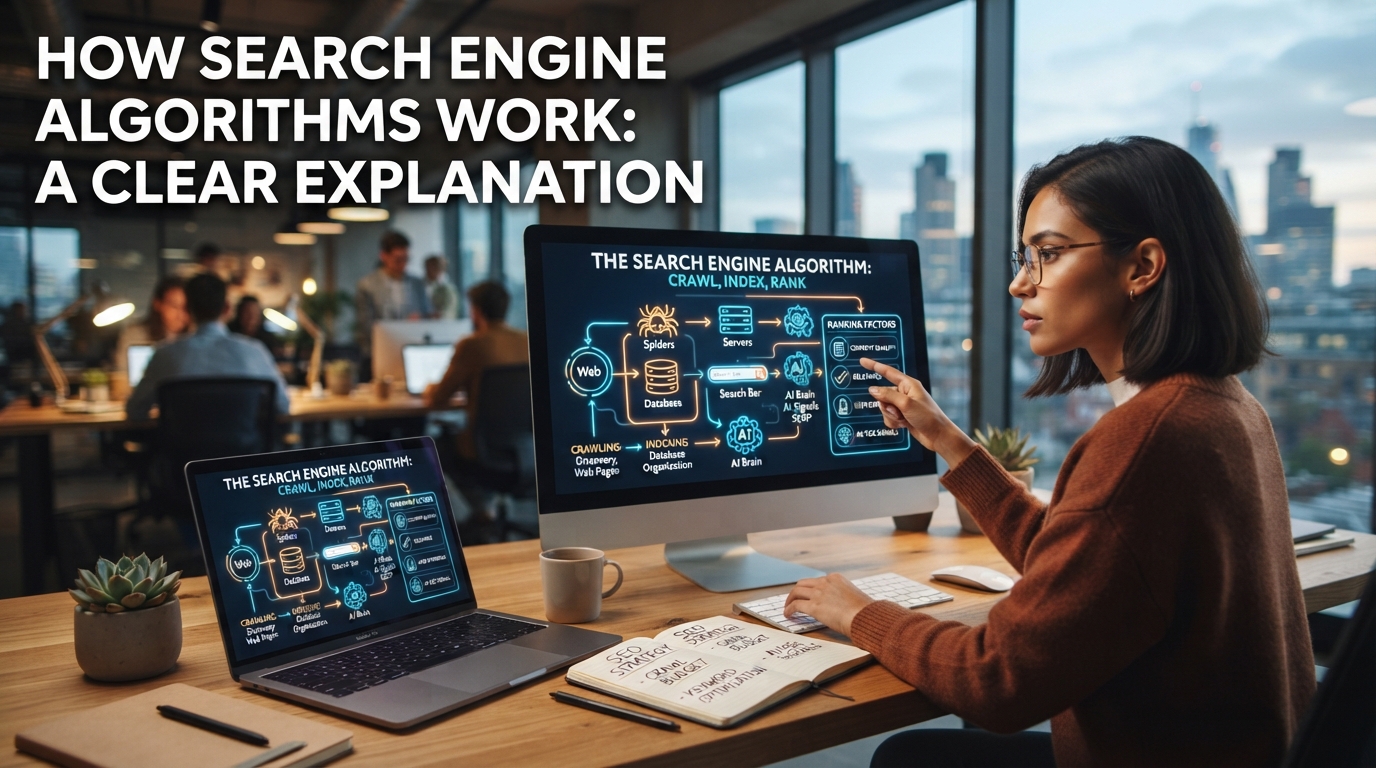
Your website’s traffic depends on code you’ll never see—yet understanding how it works is the difference between getting found and staying invisible. Search engines like Google process billions of pages daily, using algorithms to decide which results appear for each query. These algorithms aren’t magic, but they are complex—and they change constantly.
If you’re new to SEO, the technical jargon can feel overwhelming. Terms like "crawling," "indexing," and "RankBrain" might sound like insider secrets, but they follow logical rules. The good news? You don’t need a computer science degree to optimize for them. By breaking down how search algorithms work, you can align your content with their priorities and improve your rankings—without guesswork.
This guide explains the three core stages of search (crawling, indexing, and ranking), the key factors algorithms prioritize, and actionable steps to make your site more visible. By the end, you’ll know how to work with algorithms, not against them.
How Search Engines Work: The 3-Step Process
Search engines follow a three-part process to deliver results: crawling, indexing, and ranking. Think of it like a library:
- Crawling = Librarians scanning shelves to find new books.
- Indexing = Cataloging those books so they can be found later.
- Ranking = Recommending the best book for a reader’s question.
Each step is critical. If your site isn’t crawled, it can’t be indexed. If it’s not indexed, it can’t rank. And if it ranks poorly, users won’t see it. Let’s break down how each stage works—and how to optimize for it.
1. Crawling: How Search Engines Discover Your Pages
Crawling is the process search engines use to find new or updated content on the web. They do this using bots (also called "spiders" or "crawlers"), which follow links from page to page like a reader clicking through a website.
How Crawling Works
- Starting points: Bots begin with a list of known URLs (e.g., from sitemaps or previous crawls).
- Following links: They move from one page to another via internal links (on your site) and external links (from other sites).
- Prioritization: Bots don’t crawl every page equally. They prioritize:
- Pages linked from high-authority sites.
- Pages updated frequently (e.g., news sites, blogs).
- Pages listed in your sitemap.
Common Crawl Barriers
If bots can’t access your pages, they can’t index or rank them. Watch out for:
- Robots.txt: This file tells bots which pages not to crawl. A misconfigured
robots.txtcan block important pages. - Noindex tags: These meta tags tell search engines not to index a page. Use them intentionally (e.g., for duplicate content), not accidentally.
- Broken links: If a page has no internal or external links pointing to it, bots may never find it.
- Slow load times: Bots have limited time to crawl your site. Slow pages may get skipped.
Actionable tip: Use Google Search Console’s URL Inspection Tool to check if your pages are being crawled. If not, audit your robots.txt file and internal linking structure.
2. Indexing: How Search Engines Store and Organize Content
Once a bot crawls a page, the search engine decides whether to index it—that is, store it in its database so it can appear in search results. Not all crawled pages get indexed. Think of indexing like a library catalog: only the most relevant, high-quality books make it onto the shelves.
What Gets Indexed (and What Doesn’t)
Search engines index pages based on:
- Quality: Is the content original, useful, and well-written?
- Uniqueness: Does it offer something new, or is it duplicate content?
- Technical signals: Is the page mobile-friendly? Does it load quickly?
Pages that don’t get indexed often include:
- Thin content (e.g., pages with little text or value).
- Duplicate content (e.g., identical product descriptions across multiple pages).
- Low-quality or spammy pages (e.g., keyword-stuffed or auto-generated content).
How to Check Your Index Status
- Google Search Console: The "Coverage" report shows which pages are indexed and which are excluded (and why).
- Site search: Type
site:yourwebsite.cominto Google to see how many of your pages are indexed.
Actionable tip: If important pages aren’t indexed, improve their content quality, fix technical issues (like slow load times), and submit them via Google Search Console.
3. Ranking: How Search Engines Match Pages to Queries
Ranking is where the algorithm’s complexity shines. When a user types a query, the search engine sifts through its indexed pages to find the best matches. It’s not just about keywords—it’s about intent.
Understanding Query Intent
Search queries fall into three main categories:
- Informational: The user wants to learn something (e.g., "how to fix a leaky faucet").
- Navigational: The user wants to find a specific site (e.g., "Facebook login").
- Commercial/Transactional: The user wants to buy or compare (e.g., "best running shoes 2024").
Algorithms analyze the query to determine intent, then rank pages that best satisfy it. For example, a search for "best laptops" likely has commercial intent, so the top results will include comparison articles and product pages—not blog posts about laptop history.
Key Ranking Factors
Algorithms use hundreds of signals to rank pages, but these are the most influential:
| Topic | Detail |
|---|---|
| Content quality | High-quality content answers user questions thoroughly and accurately. Focus on depth, originality, and E-E-A-T (Experience, Expertise, Authoritativeness, Trustworthiness). |
| Backlinks | Links from other sites act as "votes" of confidence. Build high-quality backlinks through guest posts, digital PR, and creating link-worthy content. |
| User experience | Pages that load quickly and work well on mobile rank higher. Improve Core Web Vitals (e.g., Largest Contentful Paint, Cumulative Layout Shift). |
| Technical SEO | Clean code and structured data help search engines understand your content. Use schema markup, fix crawl errors, and ensure mobile-friendliness. |
| AI signals | Algorithms like RankBrain and BERT interpret context and intent. Write naturally, answer questions directly, and use conversational language. |
Actionable tip: Use tools like Ahrefs or Moz to analyze your top competitors’ ranking factors. Identify gaps in your content or backlink profile and fill them.
Key Ranking Factors: What Algorithms Prioritize
Algorithms don’t rank pages randomly. They prioritize signals that indicate quality, relevance, and user satisfaction. Here’s a deeper dive into the most important factors—and how to optimize for them.
1. Content Quality: The Foundation of SEO
Content is the backbone of SEO. Algorithms favor pages that:
- Answer user questions thoroughly: A 2,000-word guide on "how to start a blog" will outrank a 300-word post if it covers the topic in more depth.
- Demonstrate E-E-A-T: Google’s Search Quality Evaluator Guidelines emphasize Experience, Expertise, Authoritativeness, and Trustworthiness. For example:
- A medical article written by a doctor (expertise) will rank higher than one written by a general blogger.
- A product review based on hands-on testing (experience) will outperform a generic summary.
- Are original: Duplicate or scraped content gets penalized. Even if you’re writing about a common topic (e.g., "best coffee makers"), add unique insights, data, or examples.
How to improve content quality:
- Research your topic thoroughly. Use tools like AnswerThePublic to find common user questions.
- Structure content for readability (e.g., short paragraphs, bullet points, subheadings).
- Update old content regularly. Freshness matters, especially for time-sensitive topics.
2. Backlinks: The "Votes" That Boost Rankings
Backlinks are links from other websites to yours. They act as endorsements—algorithms interpret them as signals of trust and authority. However, not all backlinks are equal.
Quality vs. Quantity
- High-quality backlinks: Come from authoritative, relevant sites (e.g., a link from The New York Times to your news site).
- Low-quality backlinks: Come from spammy, irrelevant, or low-authority sites (e.g., a link from a random forum or a paid link scheme).
Google’s Penguin update (2012) targeted sites with manipulative backlink profiles, penalizing those that bought links or used link farms. Today, algorithms prioritize natural, earned links over artificial ones.
How to build high-quality backlinks:
- Guest posting: Write articles for reputable sites in your industry. Include a link back to your site in your author bio or content.
- Digital PR: Create newsworthy content (e.g., original research, expert interviews) that journalists and bloggers will want to link to.
- Broken link building: Find broken links on other sites and suggest your content as a replacement.
- Create link-worthy content: Infographics, tools, and in-depth guides naturally attract links.
Actionable tip: Use Ahrefs’ Backlink Checker to analyze your backlink profile. Disavow toxic links using Google’s Disavow Tool if necessary.
3. User Experience (UX): Speed, Mobile, and Engagement
Algorithms don’t just evaluate content—they measure how users interact with it. A page that loads slowly or frustrates visitors will rank poorly, even if the content is great. Key UX signals include:
Core Web Vitals
Google’s Core Web Vitals measure three aspects of page performance:
- Largest Contentful Paint (LCP): How long it takes for the main content to load. Aim for < 2.5 seconds.
- First Input Delay (FID): How long it takes for the page to respond to user interactions (e.g., clicking a button). Aim for < 100 milliseconds.
- Cumulative Layout Shift (CLS): How much the page layout shifts during loading. Aim for < 0.1.
Mobile-Friendliness
Over 60% of searches happen on mobile devices. If your site isn’t mobile-friendly, you’re losing rankings and traffic. Use Google’s Mobile-Friendly Test to check your site.
Engagement Metrics
Algorithms track how users interact with your page:
- Dwell time: How long users stay on your page before returning to search results. Longer dwell time = better.
- Bounce rate: The percentage of users who leave after viewing only one page. A high bounce rate can signal poor UX or irrelevant content.
- Click-through rate (CTR): The percentage of users who click your link in search results. A low CTR may indicate your title or meta description needs improvement.
How to improve UX:
- Optimize images (compress them, use modern formats like WebP).
- Use a content delivery network (CDN) to speed up load times.
- Simplify navigation and reduce pop-ups.
- Test your site on multiple devices and browsers.
4. Technical SEO: The Behind-the-Scenes Work
Technical SEO ensures search engines can crawl, index, and understand your site. It’s the foundation for all other SEO efforts. Key technical factors include:
Structured Data
Structured data (or schema markup) helps search engines understand your content’s context. For example, it can tell Google that a page is a recipe, a product, or an event. This can lead to rich snippets in search results, which improve CTR.
Example: A recipe page with structured data might show star ratings, cooking time, and calorie count directly in search results.
How to implement structured data:
- Use Google’s Structured Data Markup Helper.
- Test your markup with the Rich Results Test.
HTTPS
Google has used HTTPS as a ranking signal since 2014. Sites with SSL certificates (the "s" in "https://") rank higher than those without. If your site still uses HTTP, migrate to HTTPS immediately.
XML Sitemaps
An XML sitemap lists all the pages on your site, helping search engines discover and crawl them. Submit your sitemap to Google Search Console to ensure all important pages are indexed.
Actionable tip: Use a tool like Screaming Frog to audit your site for technical issues (e.g., broken links, duplicate content, missing meta tags).
5. AI and Machine Learning: How Algorithms "Think"
Modern search algorithms don’t just match keywords—they understand context and intent using AI and machine learning. Two key AI systems are:
RankBrain
Introduced in 2015, RankBrain is Google’s machine-learning system that interprets queries and ranks pages based on user behavior. For example:
- If users frequently click on a specific result for the query "best running shoes," RankBrain will learn to rank that page higher.
- It can also understand synonyms and related terms (e.g., "jogging shoes" vs. "running shoes").
BERT
BERT (Bidirectional Encoder Representations from Transformers), launched in 2019, helps Google understand the nuances of language. It analyzes the context of words in a query to deliver more accurate results.
Example: For the query "can you get medicine for someone pharmacy," BERT understands the user is asking if they can pick up medicine for someone else. Before BERT, Google might have misinterpreted the query as a request for medicine names.
How to optimize for AI-driven search:
- Write naturally. Avoid keyword stuffing—focus on answering user questions clearly.
- Use conversational language. AI systems like BERT are better at understanding natural speech.
- Cover topics thoroughly. AI favors in-depth content that addresses multiple aspects of a query.
Common Myths About Search Algorithms
SEO is full of misconceptions. Here are a few myths—and the truths behind them.
Myth 1: "Keyword Density Matters Most"
Reality: Keyword stuffing (cramming a page with keywords) hurts rankings. Algorithms prioritize semantic relevance—how well your content matches the user’s intent—not keyword density. Focus on covering the topic thoroughly and using keywords naturally.
Myth 2: "Paid Ads Boost Organic Rankings"
Reality: Paid ads (Google Ads) and organic rankings are separate. Running ads won’t improve your organic rankings, and vice versa. However, ads can increase visibility and drive traffic, which may indirectly improve engagement metrics (e.g., dwell time).
Myth 3: "More Pages = Better Rankings"
Reality: Quality trumps quantity. A single high-quality, in-depth page will outrank 10 thin, low-value pages. Focus on creating comprehensive, useful content rather than publishing frequently for the sake of it.
Myth 4: "Meta Keywords Still Matter"
Reality: Meta keywords (a meta tag listing keywords for a page) haven’t been a ranking factor since the early 2000s. Google ignores them entirely. Instead, focus on meta titles and descriptions, which influence CTR.
Myth 5: "Social Media Directly Impacts Rankings"
Reality: Social signals (e.g., likes, shares) aren’t direct ranking factors. However, social media can indirectly boost rankings by:
- Driving traffic to your site.
- Increasing brand awareness, which can lead to more searches for your brand.
- Helping content go viral, which can attract backlinks.
How to Optimize for Algorithms: Quick Wins
You don’t need to overhaul your site to see improvements. Start with these quick wins to align with algorithm priorities.
1. Audit Your Crawlability and Indexing
- Use Google Search Console to check for crawl errors and indexing issues.
- Submit an XML sitemap to help search engines discover your pages.
- Fix broken links and redirect chains (use Screaming Frog for this).
2. Improve Content for User Intent
- Identify the intent behind your target keywords (informational, navigational, commercial).
- Update old content to better match intent. For example:
- If a page ranks for "best running shoes" but only lists products without reviews, add in-depth analysis.
- If a page ranks for "how to tie a tie" but lacks visuals, add step-by-step images or a video.
- Use subheadings, bullet points, and short paragraphs to improve readability.
3. Build High-Quality Backlinks
- Reach out to industry blogs for guest posting opportunities.
- Create link-worthy content (e.g., original research, tools, or in-depth guides).
- Monitor your backlink profile with Ahrefs or Moz, and disavow toxic links.
4. Optimize for Core Web Vitals
- Test your site’s performance with Google PageSpeed Insights.
- Compress images and use lazy loading to improve load times.
- Minimize render-blocking JavaScript and CSS.
5. Monitor Performance and Adapt
- Track rankings with tools like Ahrefs or SEMrush.
- Use Google Search Console to monitor impressions, clicks, and CTR.
- Stay updated on algorithm changes (follow Google’s Search Central Blog).
The Future of Search Algorithms
Search algorithms are evolving faster than ever, driven by AI, voice search, and multimodal experiences. Here’s what to watch—and how to stay ahead.
1. AI-Driven Search (e.g., SGE)
Google’s Search Generative Experience (SGE) uses AI to generate conversational, summarized answers directly in search results. For example, a query like "what are the best running shoes for flat feet" might return an AI-generated list with pros, cons, and links to sources.
How to adapt:
- Focus on comprehensive, authoritative content that AI can pull from.
- Use structured data to help AI understand your content’s context.
- Optimize for long-tail, conversational queries (e.g., "what’s the best laptop for graphic design under $1,000?").
2. Voice Search and Conversational Queries
Voice search is growing, with 27% of the global population using it on mobile devices. Voice queries tend to be longer and more conversational than text searches.
How to adapt:
- Target question-based keywords (e.g., "how do I fix a leaky faucet" instead of "leaky faucet repair").
- Use natural language in your content.
- Optimize for featured snippets, which are often read aloud in voice search results.
3. Multimodal Search (Images, Videos, Audio)
Search isn’t just about text anymore. Google Lens, YouTube search, and audio search (e.g., podcasts) are expanding how users find information.
How to adapt:
- Optimize images with descriptive filenames, alt text, and structured data.
- Create video content and optimize it for search (e.g., transcripts, titles, descriptions).
- Publish podcasts with show notes and transcripts.
4. Personalization and Localization
Algorithms are getting better at delivering personalized results based on user location, search history, and preferences. Local SEO is more important than ever for businesses with physical locations.
How to adapt:
- Claim and optimize your Google Business Profile.
- Encourage customer reviews (they influence local rankings).
- Use local keywords (e.g., "best coffee shop in Austin" instead of "best coffee shop").
Conclusion: Work With Algorithms, Not Against Them
Search algorithms aren’t your enemy—they’re the rules of the game. By understanding how they work (crawling, indexing, ranking) and what they prioritize (content quality, backlinks, UX), you can optimize your site to rank higher and attract more traffic.
Start with the quick wins:
- Audit your crawlability and indexing.
- Improve content for user intent.
- Build high-quality backlinks.
- Optimize for Core Web Vitals.
- Monitor performance and adapt.
The key to long-term SEO success? Focus on users first. Algorithms are designed to deliver the best possible results for searchers. If you create valuable, relevant, and user-friendly content, the rankings will follow.
Stay curious, keep learning, and don’t chase every algorithm update. Instead, build a site that users love—and search engines will too.