How Search Engines Personalize Results: A Behind-the-Scenes Look
 Thu Nghiem
Discover how search engines tailor results using location, search history, and AI—plus actionable SEO strategies to optimize for personalized search and improve visibility for every user.
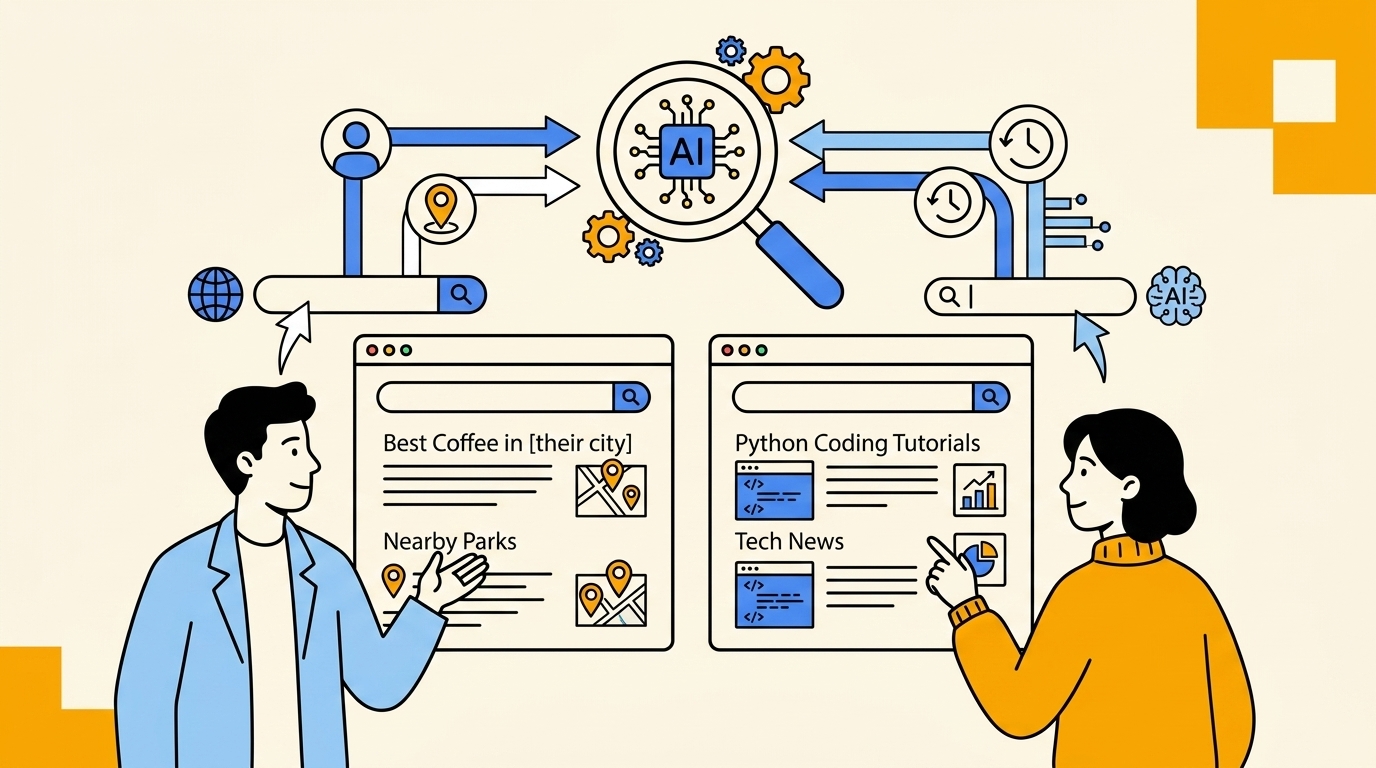
Imagine two people typing the exact same query—"best running shoes"—into Google at the same moment. One sees a list of high-performance trail runners from REI, while the other gets recommendations for budget-friendly options from Walmart. Why the difference? The answer lies in search personalization, the invisible hand shaping what you see based on who you are, where you are, and what you’ve done online.
For marketers, SEO professionals, and content creators, personalization isn’t just a curiosity—it’s a fundamental shift in how search works. If you’ve ever wondered why your rankings fluctuate or why some users convert while others bounce, understanding personalization is the key. This guide breaks down the core factors driving personalized results, the technology behind them, and how to adapt your strategy to stay ahead.
Why Personalization Matters
The Personalization Paradox
Search engines used to deliver the same results to everyone. Today, that’s the exception, not the rule. Personalization means that two users searching for "coffee shops" might see entirely different lists: one gets hipster roasteries in Brooklyn, the other sees drive-thru chains near their suburban home. This isn’t random—it’s a deliberate effort to match results to individual needs.
But personalization isn’t the same as a "filter bubble." While critics argue that tailored results can reinforce biases, search engines aim for relevance, not isolation. The goal is to surface the most useful information for you, whether that’s local news, niche hobbies, or emergency services.
Why It’s Non-Negotiable for SEO
Personalization changes the game for marketers in three ways:
- User expectations: People assume search engines "know" them. If your content doesn’t align with their context, they’ll ignore it.
- Engagement metrics: Click-through rates (CTR) and dwell time now vary by user. A page ranking #3 for one person might outperform #1 for another.
- Ranking volatility: Traditional ranking reports (e.g., "we’re #2 for 'best CRM'") are incomplete. Your true position depends on the user.
How Search Engines Personalize Results: Core Factors
Search engines use a mix of explicit data (what you tell them) and implicit signals (what they infer) to tailor results. Here are the six most influential factors:
1. Location: The Power of "Near Me"
How it works: Your physical location (via GPS, IP address, or Wi-Fi) determines what you see. Search for "dentist" in Miami, and you’ll get local clinics—not a Wikipedia page about dentistry.
Examples:
- "Pizza delivery" → Results prioritize restaurants within a 5-mile radius.
- "Tax accountant" → Shows firms licensed in your state.
- "Concerts" → Lists events near your city, with tickets available in your currency.
SEO takeaway: Local SEO isn’t just for brick-and-mortar businesses. Even e-commerce sites can benefit from location-based landing pages (e.g., "/florida-shipping").
2. Search History: Your Digital Footprint
How it works: Search engines track your past queries, clicks, and how long you spend on pages. If you frequently search for "vegan recipes", future results for "dinner ideas" will skew plant-based.
Key signals:
- Query chains: If you search "symptoms of flu" followed by "urgent care near me", search engines may prioritize medical clinics.
- Dwell time: Spending 5 minutes on a blog about "how to train a puppy" signals relevance, so similar content may rank higher later.
- Repeat visits: Clicking the same site multiple times (e.g., Amazon for product research) can boost its visibility for related queries.
SEO takeaway: Create content that aligns with user intent journeys, not just single keywords. For example, a skincare brand might target "dry skin remedies" followed by "best moisturizers for sensitive skin."
3. Device and Platform: The Medium Matters
How it works: Your device type, operating system, and even browser influence results. Mobile users often see shorter, more visual results, while desktop users get in-depth articles.
Examples:
- "Weather" → Mobile users see a 3-day forecast with a "Save to Home Screen" prompt; desktop users get a 10-day outlook with radar maps.
- "Flight deals" → iPhone users might see Apple Wallet integration; Android users get Google Flights shortcuts.
- "How to fix a leaky faucet" → Desktop results prioritize step-by-step guides; mobile results favor YouTube tutorials.
SEO takeaway: Optimize for device-specific experiences. Test mobile page speed, use AMP for news content, and ensure videos are mobile-friendly.
4. Social Signals: The Influence of Your Network
How it works: While search engines no longer use social media metrics (like Facebook likes) as direct ranking factors, they still consider social context. For example:
- If your LinkedIn connections frequently share articles about "remote work tools", you may see more content on that topic.
- Google’s discontinued "+1" button once influenced personalization, and similar signals (e.g., shared content in Gmail) may still play a role.
SEO takeaway: Encourage social sharing to amplify reach, but focus on engagement (comments, saves) over vanity metrics (likes). Tools like BuzzSumo can help identify trending topics in your niche.
5. Contextual Clues: The "Right Now" Factor
How it works: Search engines adjust results based on real-time context, such as:
- Time of day: "Breakfast ideas" at 7 AM vs. "late-night snacks" at 11 PM.
- Trending topics: "Election results" during voting season vs. "how to register to vote" in off-years.
- Recent activity: If you just searched "best laptops 2026", subsequent queries like "budget laptops" will prioritize product pages over blog posts.
SEO takeaway: Create time-sensitive content (e.g., holiday gift guides, event recaps) and use schema markup to highlight freshness (e.g., datePublished, dateModified).
6. User Profiles: The Logged-In Advantage
How it works: When you’re signed into a search engine (e.g., Google, Bing), personalization intensifies. Your account stores:
- Saved preferences (e.g., language, safe search filters).
- Past interactions (e.g., Gmail searches, YouTube watch history).
- Subscriptions (e.g., Google News topics, podcasts).
Example: A logged-in user who frequently reads The New York Times may see its articles ranked higher for news queries, even if other sources have stronger backlinks.
SEO takeaway: Optimize for logged-in users by aligning with their interests. For example, a travel brand might create content around "hidden gems in [user’s home city]" to leverage their location data.
The Technology Behind Personalization
Personalization isn’t magic—it’s a mix of data science, machine learning, and real-time processing. Here’s how it works under the hood:
Algorithms: The Brain of Personalization
Search engines use AI models to interpret user signals and adjust rankings dynamically. Key players include:
- RankBrain: Google’s machine learning system that interprets ambiguous queries (e.g., "how to fix a door that won’t close" → prioritizes DIY repair guides over door manufacturers).
- BERT: A natural language processing model that understands context (e.g., "can you get medicine for someone at the pharmacy" → recognizes the intent is about proxy pickup, not personal medication).
- MUM: A newer model that handles complex, multi-step queries (e.g., "how to prepare for a trip to Japan" → combines flight, hotel, and cultural tips).
How it adapts: These algorithms don’t just rank pages—they learn from user behavior. If 80% of users click the second result for "best project management tools", the algorithm may swap its position with the first.
Data Sources: The Fuel for Personalization
Search engines gather data from multiple touchpoints:
| Source | Example |
|---|---|
| Cookies | Tracks past visits to a site (e.g., returning to an e-commerce store). |
| IP address | Determines location (e.g., city, country). |
| Account activity | Syncs search history across devices (e.g., signed-in Google users). |
| Third-party data | Integrates with apps (e.g., Maps, Gmail) to refine intent. |
| Device sensors | Uses GPS, accelerometer, or even ambient light to infer context. |
Privacy note: With cookie deprecation (e.g., Chrome’s 2024 phase-out), search engines are shifting to first-party data (e.g., logged-in activity) and cohort-based targeting (e.g., grouping users by interests rather than tracking individuals).
Real-Time Adjustments: The "Mid-Search" Tweak
Personalization isn’t static. Search engines refine results during a session based on:
- Click patterns: If you skip the first three results for "best CRM software", the algorithm may reshuffle the list.
- Dwell time: Spending 30 seconds on a page signals relevance; bouncing in 2 seconds may demote it.
- Query refinements: Adding "for small businesses" to "CRM software" triggers a new set of results.
Example: Search for "best headphones" → click a review site → refine to "wireless headphones under $100" → see a curated list of budget options.
Personalization vs. Privacy: The Trade-Offs
The User Benefits
Personalization delivers three key advantages:
- Relevance: Reduces noise by filtering out irrelevant results (e.g., showing "vegan restaurants" to a vegetarian).
- Convenience: Saves time by anticipating needs (e.g., "traffic to work" auto-updates with your commute route).
- Discovery: Surfaces niche content (e.g., a blog about "rare orchids" for a hobbyist).
The Concerns
Critics highlight three major risks:
- Filter bubbles: Over-personalization can limit exposure to diverse viewpoints (e.g., only seeing news from one political slant).
- Data transparency: Users often don’t know how their data is used (e.g., why they see certain ads).
- Security: Personalized results can reveal sensitive info (e.g., health queries, financial searches).
How to Limit Personalization
Users can reduce personalization with these tools:
- Incognito mode: Disables search history tracking (but not location or device data).
- Privacy settings: Adjust preferences in Google/Bing accounts (e.g., pause activity tracking).
- Alternative search engines: DuckDuckGo and Startpage don’t personalize results by default.
- Opt-out tools: Browser extensions like Privacy Badger block trackers.
For marketers: Balance personalization with transparency. For example, a healthcare site might use location data to show nearby clinics but avoid storing sensitive search queries.
How Marketers Can Adapt to Personalized Search
Personalization doesn’t mean SEO is dead—it means strategy needs to evolve. Here’s how to optimize for tailored results:
1. Local SEO: Win the "Near Me" Game
Why it matters: 46% of all Google searches have local intent (e.g., "plumber near me").
Actionable tips:
- Claim your Google Business Profile: Ensure NAP (Name, Address, Phone) consistency across directories.
- Target "near me" keywords: Optimize for "[service] near me" (e.g., "emergency dentist near me").
- Leverage reviews: Encourage customers to leave detailed reviews (e.g., "great for families" or "quick service").
- Use local schema: Mark up addresses, hours, and services with
LocalBusinessschema.
Example: A coffee shop in Portland might create a page titled "Best Cold Brew in Portland – Open Late" to capture local intent.
2. Content Strategy: Cover All Angles
Why it matters: Personalization means users see different results for the same query. Your content must appeal to all potential intents.
Actionable tips:
- Map intent types: Create content for informational ("how to fix a leaky faucet"), commercial ("best faucet brands"), and transactional ("buy Moen faucet") queries.
- Diversify formats: Mix blog posts, videos, and FAQs to capture varied preferences (e.g., mobile users may prefer videos).
- Update old content: Refresh outdated posts to maintain relevance (e.g., "best smartphones 2026").
- Use topic clusters: Group related content (e.g., "parenting tips" → "newborn sleep schedules", "toddler meal ideas").
Example: A fitness brand might create:
- A blog post: "How to Build Muscle at Home"
- A video: "5-Minute Workouts for Busy Parents"
- A tool: "Free Meal Plan Generator"
3. Technical SEO: Optimize for Devices and Speed
Why it matters: Mobile users see different results than desktop users, and slow pages get penalized.
Actionable tips:
- Mobile-first indexing: Use Google’s Mobile-Friendly Test to check responsiveness.
- Core Web Vitals: Improve LCP (loading speed), FID (interactivity), and CLS (visual stability).
- Structured data: Use schema markup to highlight key info (e.g.,
FAQPage,BreadcrumbList). - Accelerated Mobile Pages (AMP): For news sites, AMP can boost visibility in mobile search.
Example: An e-commerce site might:
- Compress images to improve load time.
- Use
Productschema to display prices and ratings in search results. - Implement lazy loading for below-the-fold content.
4. Testing: Measure Personalized vs. Non-Personalized Results
Why it matters: Traditional rank tracking tools don’t account for personalization.
Actionable tips:
- Use Google Search Console (GSC): Compare impressions and CTR for the same keyword across devices/locations.
- Incognito testing: Search for your target keywords in incognito mode to see "neutral" results.
- A/B test content: Publish two versions of a page (e.g., one with a video, one without) and track engagement.
- Leverage tools: Platforms like SEMrush and Ahrefs offer personalized rank tracking for logged-in users.
Example: A SaaS company might notice that "best CRM for startups" ranks #5 in GSC but #2 in incognito mode—suggesting personalization is boosting its visibility for certain users.
The Future of Search Personalization
Personalization is evolving rapidly, driven by AI, privacy laws, and new technologies. Here’s what’s next:
AI Advancements: Smarter, Faster Personalization
- Predictive search: Search engines will anticipate needs before you type (e.g., suggesting "umbrella" when rain is forecasted).
- Voice assistants: Personalization will extend to voice search (e.g., Alexa remembering your coffee order).
- Hyper-personalized snippets: Featured snippets may adapt to user history (e.g., a "how to bake a cake" snippet showing vegan recipes for a vegetarian).
Privacy Shifts: Less Tracking, More Context
- Cookie deprecation: Search engines will rely more on first-party data (e.g., logged-in activity) and cohort-based targeting.
- Federated learning: AI models will train on-device (e.g., your phone) to personalize results without sending data to the cloud.
- Regulatory pressure: Laws like GDPR and CCPA will force greater transparency (e.g., "Why am I seeing this?" explanations).
Emerging Trends: Beyond the Screen
- AR/VR search: Personalized results will extend to augmented reality (e.g., "show me furniture that fits my living room").
- Cross-platform syncing: Search history and preferences will follow you across devices (e.g., phone, smartwatch, car).
- Emotion-aware search: Cameras and sensors may detect mood (e.g., suggesting "calming music" if you look stressed).
Key Takeaways
- Personalization is the default: Search engines tailor results based on location, history, device, and more—so generic SEO strategies fall short.
- User data drives results: From IP addresses to search history, every interaction shapes what you see.
- Marketers must adapt: Optimize for local intent, diverse content formats, and technical performance to stay visible.
- Privacy is reshaping personalization: Cookie deprecation and regulations will force new approaches to targeting.
- The future is predictive: AI will anticipate needs, while AR/VR will make search more immersive.
Next Steps
- Audit your site for local SEO gaps (e.g., missing Google Business Profile, inconsistent NAP).
- Test your content in incognito mode to see how it ranks without personalization.
- Experiment with schema markup to highlight key details in search results.
Personalization isn’t a trend—it’s the new normal. The brands that thrive will be those that understand how search engines think and adapt their strategies accordingly.