What Is an AI SEO Content Generator and How It Works
 Thu Nghiem
Discover how an AI SEO content generator streamlines B2B SaaS content workflows by combining AI-driven drafting, structured SEO targeting, and human review—all while ensuring EU compliance and scalability.
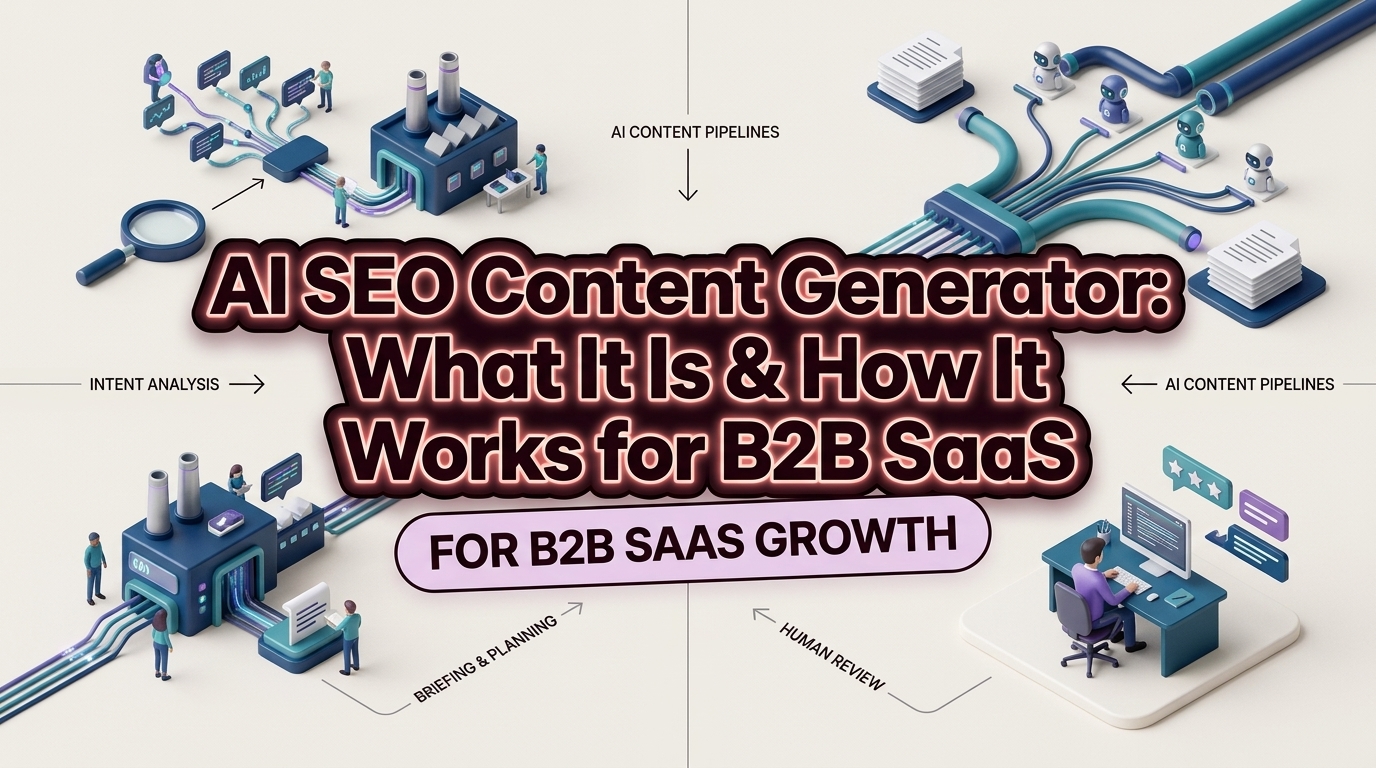
If you’ve spent hours juggling spreadsheets, briefing documents, and a half-dozen tools just to publish one SEO article, you’re not alone. B2B SaaS teams need content that ranks, converts, and scales—without the chaos. That’s where an AI SEO content generator comes in.
It’s not just another AI writer. It’s a structured execution engine that turns research into publishable articles, with human review gates to protect quality and EU-based security to meet compliance needs. Below, we’ll break down what an AI SEO content generator is, how it works in real workflows, and what features matter most when you’re choosing one for your B2B SaaS team.
What an AI SEO Content Generator Is
An AI SEO content generator is a tool designed to produce SEO-optimized articles by combining AI-driven drafting with structured SEO targeting and human oversight. Unlike generic AI writers that spit out rough drafts or legacy SEO tools that only handle keyword placement, a true AI SEO generator is built for “SEO-first” execution.
It’s defined by three core capabilities:
- Intent-aware briefing: It starts with keyword intent and clusters, not just volume.
- Structured pipeline: Research, brief, draft, review, and publish happen in a controlled flow.
- Human-in-the-loop review: Humans approve content before it goes live, preserving brand voice and accuracy.
Think of it as a bridge between your SEO strategy and your publishing pipeline. You feed it a keyword cluster or a content brief, and it returns a publish-ready draft—with SEO targets baked in. That means no more copying and pasting keywords into a doc and hoping the writer gets it right.
How AI SEO Generators Fit Into Content Workflows
An AI SEO content generator isn’t a replacement for strategy—it’s the execution layer. It sits between your keyword research and your publishing calendar, turning intent-matched topics into articles at scale.
Here’s how it fits into a typical B2B SaaS workflow:
- Strategy first: Your SEO or content team defines clusters, intent, and target pages.
- Research to brief: The AI research agent ingests data (e.g., Search Console, competitor pages) and builds a structured brief with intent signals, keyword gaps, and semantic targets.
- Draft with SEO baked in: The drafting agent uses the brief to generate a full article—with headers, internal links, and semantic richness aligned to intent.
- Human review: A content editor or reviewer checks the draft, adds nuance, and approves it.
- Publish to destination: The article goes live on your blog, BlockForm site, or custom CMS via webhook.
The result: faster content delivery with fewer tools and fewer handoffs. Instead of managing five tabs and three different platforms, you move content through a single board—from idea to live article.
Core Features to Look For
Not all AI content tools are created equal. For B2B SaaS teams, the right AI SEO generator should include these core features:
| Feature | Why It Matters |
|---|---|
| Intent-aware briefing | Ensures every article targets the right user intent (informational, commercial, transactional) from day one. |
| Multi-agent pipeline | Dedicated agents handle research, briefing, drafting, review, and publishing—no swivel-chair workflows. |
| Human-in-the-loop review | Nothing publishes without sign-off, protecting brand voice and accuracy. |
| EU-based hosting and compliance | Meets GDPR and modern privacy standards with TLS encryption, role-based access, and workspace isolation. |
| Flexible publishing destinations | Plug into your blog, BlockForm sites (with built-in forms), or custom endpoints via webhooks (Zapier, n8n, Make). |
| Built-in image and form generation | Automate hero images and conversion CTAs without switching tools. |
These features aren’t optional extras—they’re table stakes for teams that need scalable, compliant, and high-quality content.
When to Use (and When Not To)
AI SEO generators excel in specific scenarios—but they’re not a silver bullet.
Use them when:
- You need to scale content across multiple topics or clusters.
- Your team struggles with brief consistency or SEO targeting.
- Compliance and security are non-negotiable (e.g., EU-based customers).
- You want to reduce tool fragmentation and speed up publishing.
Avoid them when:
- Your content requires heavy subjective editing (e.g., creative storytelling, opinion pieces).
- You’re publishing content with nuanced tone or brand voice that resists templating.
- The topic is so specialized that only human experts can produce accurate, credible output.
For most B2B SaaS teams, the benefits outweigh the limitations—especially when paired with human review.
Real-World Outcomes and Examples
Let’s look at what this looks like in practice.
Example: A B2B SaaS company plans a 5-page cluster around “AI content workflows.” Instead of assigning five separate writers and risking inconsistent messaging, they use an AI SEO generator to:
- Research intent and semantic gaps across the cluster.
- Generate structured briefs for each page.
- Draft full articles with internal linking and CTA placement.
- Route all five drafts to a content editor for review.
- Publish the cluster in two weeks—with consistent tone, SEO targeting, and conversion paths.
Results:
- 12× faster brief-to-draft: Articles go from brief to polished draft in hours, not days.
- 48-hour average cluster-to-publish: From idea to live, a cluster of related pages ships in under two days on average.
- Fewer tools, fewer errors: No more copy-pasting keywords into Google Docs or juggling spreadsheets for cluster planning.
This isn’t hypothetical—it’s the kind of outcome teams are seeing when they replace fragmented workflows with a single, agentic pipeline.
How to Choose the Right AI SEO Content Generator
Choosing the right tool depends on your priorities: speed, compliance, scalability, or integration. Here’s a checklist to guide your decision:
Security & Compliance
- Is the platform EU-hosted with TLS encryption?
- Does it offer role-based access and workspace isolation?
- Are audit trails built in for compliance reporting?
Workflow Integration
- Does it use a Kanban-style board to track content from idea to live?
- Are there approval gates before publishing?
- Can it integrate with your CMS, forms, or automation tools via webhooks?
Scalability
- Can it handle multi-site or multi-brand publishing?
- Does it support keyword clusters and semantic SEO at scale?
- Is the pipeline customizable for your team’s workflow?
Avoid tools that promise “AI writing” but lack SEO targeting, human review, or compliance features. For B2B SaaS teams, those gaps can derail both rankings and trust.
Start Shipping SEO Content Like a System—Not a Scramble
If your content workflow still feels like a game of hot potato—brief in one tab, draft in another, publish in a third—you’re not set up to scale. An AI SEO content generator isn’t magic. It’s a system: a structured, agentic pipeline that turns research into published articles with human oversight and EU-grade security.
The best part? You don’t need to overhaul your stack. The right tool plugs into your existing workflows—whether you publish to a public blog, BlockForm sites, or custom CMS endpoints. And with human review gates in place, you keep control over quality without sacrificing speed.
It’s time to stop managing chaos and start managing content.